Books by Elaine Littau
Nan's Heritage Series-Set in the 1800s- Book I, Nan's Journey-Book II, Elk's Resolve-Book III, Luke's Legacy- Book IV, The Eyes of a Stranger- Book V, Timothy's Home Rescued...A Series of Hope Book I, Some Happy Day - Book II, Capture the Wandering Heart- Book III, Walk Slowly Through the Dark Nashville Series set in 1974: Six Miles From Nashville
Saturday, May 18, 2013
One Author's Journey #8
It was November 2012 and I signed up for NaNoWriMo again. (National Novel Writing Month) Book #8 was supposed to be the next in the Rescued...a Series of Hope saga. I started the book, Walk Slowly Through the Dark, but just couldn't get the story to advance in an interesting way. One day, while I painted the steps from the laundry room up to our bedroom, a new book idea came to mind.
I had been watching the new television show "Nashville" and found it to be interesting. It seemed that a lot of people were watching and I saw a lot of advertisement for the show. It occurred to me that setting the next book in the Nashville area might be a good move. Perhaps people would find it while they looked for information on the television show. I had never written a contemporary book, but decided that it would be a good fit for this year's writing challenge.
When I told our sons that I was writing a modern day book set in 1974 they laughed. They told me it was hardly a current story since it was almost forty years ago. I told them it was set 100 years later than the last book I wrote so it was modern!
I wanted to write a little about how the young people in the heartland of our country felt in the 1970s while the Vietnam War was going on. I was a teen in those years and remember it well. We loved our soldiers and prayed for them all the time. We wore MIA/POW bracelets and rejoiced when one was returned home.
It was also important to me to show things about the farmers of the Oklahoma and Texas panhandle area. Some of my best friends worked the wheat harvest every summer and I was glad to get to experience it once with them. The farmers here are dedicated to their land and families. Even when other dreams of careers danced in the minds of the farmer's young, the land called them back home.
The characters of Six Miles from Nashville became very real to me. Sweetie, the owner of the diner was based on a very sweet woman I worked for after school. Betty could have been any girl from our high school. The song writing was a very different experience for me. Because I am not really confident in those skills, I always referred to the lyrics as the rough copy that Bill would have to work over to make into a good song.
Next week will be about Walk Slowly Through the Dark. In a lot of ways, it took me down a dark path.
Elaine Littau, author
Saturday, May 11, 2013
One Author' Journey #7
Capture the Wandering Heart is the seventh book I wrote. It is set in the Texas Panhandle area of Palo Duro Canyon near present day Amarillo. Area towns of Clarendon and the now extinct boom town of Tascosa are also places that action takes place. It was important to have this book set close to my home. At many book events I was asked why I hadn't written about the panhandle area. I didn't have a good answer for them. I had contemplated writing about the Perryton area, but one day I knew it had to be set in the canyon.
I read an article from the Amarillo newspaper about how the Kiowa and Apache were subdued in the area by the U.S. army killing 1500 horses that were kept by them in the canyon. It was the last of the Trail of Tears saga. I knew I had to know more, In the following months I read three books and many more articles about the area in the 1800s.One book was about the Native Americans, one was about a land developer, and the other was about Charles Goodnight. I loved the research.
The story also included many folk remedies from the time. My sister was reading a book by "The Good Old Days" that was all about home remedies. There was some wild stuff in there. I had to borrow the book and use some of it in there. One remedy was the "Mad Stone". It was used to save people who contracted rabies. (Google it. You will be surprised.)
I found the research so interesting that I almost got bogged down in it. I discovered that in the 1800s, the Congress was considering putting all deaf people in one of the Western states. It would have been called "The Deaf State"! I am so glad that didn't fly.
One of my high school friends live near Palo Duro Canyon, so she shot some pictures for the cover. I love that she did this for me. Terry and I selected the close up of one of the caves. The other picture I posted here is the view of the canyon that everyone thinks of.
In writing this book, I learned a lot about the area and about myself. It was fun to think up inventions for 1877. I liked having a character who thought 'out of the box'. I found it difficult to write about spousal abuse and how it was handled back then.
God really gave me a lot of wonderful elements for the story line. I know I can't write without His input. In some ways Capture the Wandering Heart is my favorite writing. I had a lot to think about for the next book in the series, but God had a different direction for me to go with book #8. I will tell you all about it next time.
Elaine Littau, author
Thursday, May 9, 2013
Spring Cleaning is Not For Wimps
Here in the Texas Panhandle it seemed that Spring would never arrive. The temperature would reach 70 degrees one day and the next day it snowed. (This happened in May!) Because of this, it has been difficult to believe that the season would ever change.
I went to my sister's house and they were in full swing of planting flowers, repairing irrigation to them, fertilizing, reseeding the lawn, and working on fountains. They keep a beautiful yard. They sat down for a break when I came to visit. Seeing all this activity caused me to feel somewhat lazy. So...
Yesterday I got out my water hose and began spraying the dirt from the windows and brick. The last time we had a little sprinkle of rain or a dusting of snow, my windows looked like someone had taken a squirt bottle and sprayed the windows with mud. I had to get that off the windows.
Little dirty rivers trickled down between the bricks as I sprayed the entire exterior of the house. I got in the screened in porch and swept it clean, sprinkled it the floor with detergent, and blasted it with the water hose. It took awhile to broom off the standing water, but shooting the floor, stucco ceiling, and screens with blasts from the water hose made everything smell so fresh.
There was still a little bit of standing water on the porch so I got out my little Mint robot, "Cindy" (short for Cinderella) and had her mop up the rest. The result is a really nice and clean floor on the porch.
I then went to the decks and washed them off. We have two small ones that are at two of our doors and one larger one that is outside our dining room and patio doors. I was amazed at the difference rinsing them off with the water hose did.
Next, I went to the patio area at the West side of the house. We like to sit there in pretty weather and watch the sun set over the prairie. Our little family had labored many hours in making the patio with a concrete form that shaped the concrete into what is supposed to look like rocks. We didn't get it all that level, so dirt collects in the low spots. We should redo it, but I can still see my teen aged sons and hubby as they work on this. (I helped, too. Stop laughing....I really did!)
We have buffalo grass and I am so grateful. It is sturdy stuff that doesn't die when there is a drought. However, even the buffalo grass is looking like it is on its last legs. I decided that I had to water it after I made sure all the trees were watered.
People from other places do not think I have many trees, but they haven't had to water them. We have somewhere between 60 to 80. Our cedar windbreak is looking pretty bad. There are many dead limbs. I am desperate to save those trees because they are our privacy for the swimming pool. (One of those above ground kind with the blow up ring. We have a terrible time getting the ph right on it, but that is another story.)
I know we live in the country, but a neighbor owns a roping arena next to our house and pool...Sometimes they go out there to practice calf roping or to plow it up. (makes a nice dusty mess for my screened in porch) I can stay in the pool because of those trees. Without them...I would be inside.
By the time everything was washed up with the water hose and the sprinkler set...I was pooped. There is no way my yard will compare to my sweet sister's, but I was happy for the hope I have for the coming seasons. I love to take good care of the things God has given us.
We have been working on the laundry room. Terry laid a new floor and I have been painting some. My biggest struggle has been with removing the wallpaper border. Grrr.
Nothing is more motivating than watching a marathon of "Hoarders" on television. lol Terry was okay with getting rid of some of my excess, but not very inspired about looking over his stuff. I think all of us are a little like this aren't we?
Right now, I have a half-painted laundry room, a bunch of boxes of things to donate and only a pocket full of energy to complete everything. I will keep you posted!
Saturday, May 4, 2013
One Author's Journey #6
If my dad were alive today, he would be 104. When he was a small boy (There is a dispute in the family as to exactly how small he was.) he was asleep in the back of a wagon. His family did not own an automobile at this time so they were using horses and wagons to move from Kansas to Oklahoma. As he slept, he rolled off the tailgate of the wagon and landed in the tall grasses or the prairie. He hit his head and was knocked out for some time. When he came to himself, the wagon was just disappearing down a dip in the flat land. He followed the trail the wagon wheels made from denting the grass until he reached the camp of his family. They had not missed him because they were occupied with the livestock and gathering cowchips for fuel for the cooking fire.
This story always scared me when my mother recited it at family gatherings. The grass was as tall as my dad was. She said that many children were lost forever in the old days because of situations similar to this. Because of the danger and family connection, I had to use this story in my sixth book, Some Happy Day, Book I of the series, Rescued...a Series of Hope.
I changed the story to me a baby girl who was around fourteen months old. A cowboy who was running from the law found her in the tall grass. She was not old enough to even tell him her name. The story grew from this.
As I worked on this book, I found myself even more engrossed in marketing all the books I had written. I am so thankful for the authors who have written great marketing books as well as for those who have befriended me an helped me hammer out a good marketing plan. I have discovered many kind and generous friends within the 'author community'. It is a pleasure to network with people who do not feel that we are in competition.
Rescued...a Series of Hope is a series that is still in progress. It intersects the books in the Nan's Heritage Series. There were nine girls who were rescued from a bad situation. This series details each girl's life before, during, and after their kidnapping. It as been interesting how ideas in these story lines have developed. I think a lot of the situations and challenges the characters face come from the old timey stories my mother and daddy told us. They also had friends who loved to tell about their lives. I am thankful for the time my parents invested in me.
I had tackled one of the rescued girls in this book. The next book had to follow two of the others. The setting was close to home, so I had to get it right. I will attempt to tackle the job of telling you about those challenges next week.
Elaine Littau
Saturday, April 27, 2013
One Author's Journey #5
All of the books I write reflect things from my life. It was
time to write book #5, Timothy’s Home. Someone recommended a wonderful
book for writer for me called The Art of War for Fiction Writers. There
are a lot of exercises to hone writing skills in this book. One of them went
like this (more or less):
Suppose there is a truck driver driving really fast down
the highway. (Are you thinking of a hairy guy right now?
Now, the truck driver is a woman. (Tough gal?)
What if she is in a wedding dress or a formal and in full
makeup?
When I read this, I searched my mind for how to apply
this to a book set in the 1800s. What were the ‘trucks’ then? Who would be my
victim-woman driving? After a brief period of contemplation, I decided that the
biggest of the ‘big rigs’ of that time had to be the Twenty Mule Team. That
thought took me down a road I had travelled fifty years before.
I was three and my nephew was five. We were inseparable
and usually into some kind of trouble. Of course, wasn’t most of it the nephew’s
fault? (That’s my story and I’m sticking to it.) Anyway, my fifteen year old
brother had a magnificent model of the Twenty Mule Team Borax. Somehow, the
reins got all twisted up and it was destroyed. For fifty years my brother was a
little bitter about this. Once in a while he mentioned that he saw one at an
antique store or on eBay. This niggled at my mind a lot.
One summer we were in Denver and visiting our oldest
son’s in-laws. The grandfather showed us the house he had built. In the
basement there was a twenty Mule Team Borax model. I was so excited and
remarked that I needed to find one for my brother. Our son’s father-in-law said
he had one he would send to me. The problem was that it needed to be put
together. I told him I thought that would be fine.
A couple of weeks later I got a really small package in
the mail. It was half the size of a shoebox. I couldn’t guess what it was. When
I opened it, I almost cried. It was a model ready to be put together. Even the
mules came in two pieces. I had never put together a model in my life, so I
called my brother and told him I found a model. He said that he would
appreciate it if I would put it together for him. (?)
I begged Terry to help me put the thing together. He gave
me one whole day. He put together all twenty mules. The wagons were detailed
and there were even little men that went with it. Terry also routed a pretty
board and put the recommended finish nails every so many inches to hold the
mules in place. The day was over and I was on my own.
There were documents in with the model and when I studied
the instructions, I found some interesting facts about the twenty mule teams
and how they worked. After reading the short study there, I looked up a lot of
things on the internet. It was very interesting. While I painted and distressed
the wagons and put everything together for a few weeks, I contemplated the
lives of the people who worked on these wagons.
Some of the plot of Timothy’s Home unfolded there
on my dining room table. When I finished the model, I wrote the book and felt
blessed that I could share the wealth of information I had learned and not let
it go to waste. As it happened, we went
to New Mexico to see my brother and present him with the finished product. It
was fifty years late, but he was touched by my efforts. I love my brother so
much. It was worth the time and effort to see the look on his face that day.
The next book was a glimpse into my dad’s life. (He was
born in 1909)
Saturday, April 20, 2013
One Author's Journey #4
Book III was going through the last stages before its
release date when I came upon a writing challenge on the internet. It was
called the “National Novel Writing Challenge”. I clicked on the link and read
about it and was floored when I discovered the challenge was to write a book
with 50,000 words or more in one month. The month was November.
NOVEMBER, the
words stuck out like a knife. That is the month we have family over for
Thanksgiving, there are at least two craft/book shows, and I spend days cooking
and preparing the house for a lot of company. How on earth could I commit to
doing something like this?
I don’t know why, but I did it. I had never self-published
and thought this would be a good exercise in writing discipline. I would learn
how to juggle life with my writing. Up to this point, I let my life revolve
around marketing and writing. This was a test and only a test…or so I thought.
In Luke’s Legacy, Book III of the Nan’s Heritage
Series, there was a “walk on character” who had a lot of personality. Sheriff
Roy Miller met her on a train. She was a mail order bride. The man who ordered
her sent her away and didn’t marry her. I decided to write her story for the
November NaNoWriMo challenge.
The Eyes of a Stranger addressed some of my fears of being
rejected. Gertie, the main character had faced rejection all of her life and
she didn’t understand why until she left home only to be rejected once more. I
contemplated the thought process of a mail order bride. She was the precursor
to the email bride of today. One day I was visiting with my sister and we were
talking about mail order brides. I told her that I would be in the ‘return’
file on my way back home.
When she was introduced in Book III, we find that the good
Sheriff had a friend in Denver. Gertie was to go and find him to secure
employment as a nanny or housekeeper. I began the story with her life at home
and how she came to be a mail order bride. Then she had conversation with
Sheriff Roy and built the story from what was laid out there.
What was Roy’s friend like? Would he help her? Where would
she live? Where would she work? Those days were difficult for a woman on her
own. There were few women in the workplace. Most were married off very young.
Gertie was past her prime marriage years. She feared she would be an old maid.
Those were the things that tossed around in my mind in this book.
It was fun to write this on the challenge. NaNoWriMo urges
the writer to only write and not correct or edit as they go. That gave freedom
to throw caution to the wind. Editing and processing the story came in
December, January and on. I was very pleased to meet the challenge that year.
My readers were happy to have two new books within one year to read. I learned
a lot about moving with the storyline and letting the story run. It was
delightful.
It did seem that I was writing all the time, but I still had
a great time doing all the scheduled things. I think that book taught me how to
live my life as a writer and not let the books boss me around. It would seem to
be the opposite, but it wasn’t. I learned that if I write an average of 1670
words a day, I can get the rough draft completed in a month. I also learned
that it is not necessary to get a rough draft completed in a month. It is
alright if it takes two or three months. I learned that I must not forget to
connect with those I love and meet new people. After it was all said and done,
I had a new title, The Eyes of a Stranger. This book was not originally
in the plan of the series, but after I wrote it, I knew it was an important
element of it. The next move was to wrap up the series with one more book.
Saturday, April 13, 2013
One Author’s Journey
#3
Elk’s Resolve, Book II in
the Nan’s Heritage Series, seemed to fly from my mind, through my fingers, and
onto the computer screen. I learned the importance of writing every day.
Readers of the first book were ready as soon as the book was ready. Now, I just
had to get word to them. I had a clip board that readers signed on my book
table at the book events. If they were interested in being part of my “book
club”, I sent them notice when the next book was ready to be sent to them via a
postcard. This idea worked really well.
It amazed me more than anyone that
I began my third book, Luke’s Legacy. Somehow, I actually became a writer. I wrote
the first book because I heard the saying that everyone has a book inside of
them. The second one was written because there were loose ends that needed tied
up from the first one. Now, the third was a choice.
As a writer of Christian books, I
believe it is important for each book to hold a message as well as to entertain
the reader. As I write each book, I feel like I am in school and the Lord is
teaching me things I need to work on in my own Christian walk. Nan’s Journey
dealt with forgiveness while Elk’s Resolve was about overcoming
depression and prejudice. God has no grandchildren was something Luke’s
Legacy dealt with. As much as I wanted to make the decision for my
children, it was clear that each person must choose for himself.
Portions of the book dealt with
things children of Christians have expressed. Things like: “Mama is praying, so
everything will be all right.” “I’ll get into heaven on Daddy’s coattails.” “I
grew up in church. God knows me.” Sometimes I am afraid that those who have
grown up so close to making a decision for Jesus, have a more difficult time
realizing their need for Him.
While I was writing “Luke’s
Legacy”, our brother in law almost died. He was one of the people who always
came close to choosing God, but never felt he could. The doctors were working
on his failing body and he felt his spirit leave the confines of flesh and
bone. He walked through a door and found miles of desolation. He screamed out
to God to save him. Immediately, he was back into his fleshly body of pain. He
repented and asked the Lord to save his soul.
After he began recovering, he spent
a lot of time crying to his sweet wife about how much he didn’t deserve another
chance. He was so grateful that God let him live so that he could get saved.
John, my brother in law, spoke at churches and men’s groups all over the
panhandle as well as every individual who would listen to him, about this
experience. He wanted them to be ready to meet God when the time came.
John died about two years after
this experience. I asked if I could include a version of his vision/experience
in Luke’s Legacy. I think the inclusion of that portion is why some
readers have tagged it as “paranormal”. It was not. John was a changed man
after that. He was not one who had dreams or experiences like that otherwise.
He was very shy and his proclamation of his experience was surprising to
everyone who knew him. He was wonderful and we all miss him.
God has no grandchildren. You
cannot be let into the kingdom of God by default. It is a personal decision.
Period. I think that portion of the book is the whole reason the Lord led me to
write it. I thought my writing journey was over with that title. Little did I
know, it had just begun.
Saturday, April 6, 2013
My Author Journey
One Author’s Journey
#2
While the first title, Nan’s
Journey, was going through the publishing hoops, my husband urged me to
write the next book in the series. I hadn’t thought much about writing other
books. The hair on the back of my neck stood on end every time someone called
me ‘author’. I simply couldn’t believe
they were referring to me. I had the feeling that someone would pull back the
curtain and find out the ‘author’ was only me.
Book II of the Nan’s Heritage
Series seemed to fly off the laptop compared to the seven or so years it took
to write Book I. I believe the first book took so long because I never thought
it was something that would be published. With Elk’s Resolve, I had a
little momentum going. Every day my husband asked me if I had written that day.
That was a lot of pressure for me because I hadn’t gotten into the rhythm of
being a writer. Being accountable to him was what I needed to get the book
done. I also wrote furiously because I was afraid I would lose my nerve.
One lazy afternoon while I was
napping, the phone rang. It was the marketing representative from my publisher.
He told me Nan’s Journey was ready and asked me how many copies I wanted
to order. He asked a lot of questions and my mind was officially blown. I heard
terms I had never thought of before: push cards, promotional items, press
release…
He could tell I was lost, so he
recommended a book for me to read. It was Amen by Leon Mentzer. It was a
book about publishing and marketing for the beginning author. I ordered it,
some push cards, book marks, posters, and fifty books. He told me not to give
any books to friends and relatives. I didn’t listen. I was afraid if I didn’t
give the books to them, I would be stuck with them.
The books arrived. I opened the box
and cried when I saw them. My heart was within those pages. Would anyone like
it? The marketing book was in the box as well. I dove into it and cried when I
read it. I realized I really didn’t know what I was doing. I thought I would be
at my computer writing and the books would sell themselves. That’s what I had
learned from movies I had watched. I had
just watched a movie where a poor boy wrote a book and immediately was rich. In
fact, my husband had a list of things we were going to do with ‘all that
money’. One funny thing I remember from those first ‘author’ days was my first
time I went to the post office to pick up the mail for my paying job. I
honestly wondered if people would approach me and think I was famous. Nope, I
was still just me. I guess they never did get the memo that I was something
special. I just have to laugh about that.
Leon’s book gave me a dose of
reality from which I still haven’t recovered. One fact was that most authors
never sell more than ninety-nine copies. Thank the Lord; my books have done
better than that. There were ideas to get the word out and I marked up that
book and attempted to put the suggestions into practice. I contacted him and he
became my first book mentor. I will always feel blessed that he gave me good
direction in those first months.
Some orders came in from people who
had heard about me and I took them to the window of the post office. The clerk
was a sweet lady and I had given her a book. She started talking to me about
the characters in the book as if they were real people. I remember being
shocked that she knew ‘my people’. I felt exposed. This woman knew the thoughts
in my heart. I don’t know what I had expected. It did make me realize that I
needed to be careful with those words I write because people were reading.
Thursday, March 7, 2013
March Madness
Nope, this isn't about basketball. March 1st is our wedding anniversary. Terry and I have been married 38 years. I could tell you that they have all be bliss, but you would rightfully be able to call me a liar.
While all days have not been moonlight and roses, there has been a certain underlying joy in the years we have spent together. We struggled through the first few years while we were getting used to thinking of someone other than ourselves. We were 19 & 18 years old and, as you know, teenagers are notorious for being self-centered.
I wish I could say that at our 50+ years, the self-centered stuff had ceased, but that would not be the truth. What I can say is that after all these years together, my sweet husband has taught me to not take everything so seriously.
People who know me now would have a difficult time believing how deadly serious I was when Terry married me. I thought I had to be so that people would think I was a grown up. I didn't give myself or anyone else very much slack. Terry taught me how to laugh at circumstances our of my control. He taught me to see the humor behind almost everything that happens. His favorite saying is: "We are going to have so much fun growing up together." He still says that to the grands.
Our grandson, Zach, used to call him "Grandhappy" instead of Grandpappy. The happy part is a good fit for him. Of course, we have had some very sad days when some of our loved ones passed away, but the overlying atmosphere of our life together has been a deepening joy.
We still have our conflicts. In fact, we might call this month 'March madness' for a reason. The truth is that I am still madly in love with that man.
While all days have not been moonlight and roses, there has been a certain underlying joy in the years we have spent together. We struggled through the first few years while we were getting used to thinking of someone other than ourselves. We were 19 & 18 years old and, as you know, teenagers are notorious for being self-centered.
I wish I could say that at our 50+ years, the self-centered stuff had ceased, but that would not be the truth. What I can say is that after all these years together, my sweet husband has taught me to not take everything so seriously.
People who know me now would have a difficult time believing how deadly serious I was when Terry married me. I thought I had to be so that people would think I was a grown up. I didn't give myself or anyone else very much slack. Terry taught me how to laugh at circumstances our of my control. He taught me to see the humor behind almost everything that happens. His favorite saying is: "We are going to have so much fun growing up together." He still says that to the grands.
Our grandson, Zach, used to call him "Grandhappy" instead of Grandpappy. The happy part is a good fit for him. Of course, we have had some very sad days when some of our loved ones passed away, but the overlying atmosphere of our life together has been a deepening joy.
We still have our conflicts. In fact, we might call this month 'March madness' for a reason. The truth is that I am still madly in love with that man.
Tuesday, December 4, 2012
December Treats!!! Got lots of free or inexpensive ebooks ($.99) on Amazon.com on December 4-8
Go to http://decembertreats.blogspot.com to look at the titles offered.
Also
The Kindle version of Some Happy Day will be free on Dec 6 & 7, 2012 at
http://www.amazon.com/s/ref=nb_sb_noss?url=search-alias%3Ddigital-text&field-keywords=some+happy+day
Go to my website to get information on how to win the Christmas Kindle I am giving away. There is a tab at the bottom left that gives instructions. It is like a scavenger hunt. You will have a good chance of winning, so join in. http://elainelittau.com . That is the link. Go and see how your name can be in the drawing.
Go to http://decembertreats.blogspot.com to look at the titles offered.
Also
The Kindle version of Some Happy Day will be free on Dec 6 & 7, 2012 at
http://www.amazon.com/s/ref=nb_sb_noss?url=search-alias%3Ddigital-text&field-keywords=some+happy+day
Go to my website to get information on how to win the Christmas Kindle I am giving away. There is a tab at the bottom left that gives instructions. It is like a scavenger hunt. You will have a good chance of winning, so join in. http://elainelittau.com . That is the link. Go and see how your name can be in the drawing.
Subscribe to:
Posts (Atom)
Today's Wild Card author is:
and the book:
100 Ways to Simplify Your Life
Publisher: FaithWords; Lrg edition (November 12, 2008)
ABOUT THE AUTHOR:
JOYCE MEYER is one of the world's leading practical Bible teachers. A #1 New York Times bestselling author, she has written more than seventy inspirational books, including The Confident Woman, Look Great, Feel Great, and the entire Battlefield of the Mindfamily of books. She has also released thousands of audio teachings as well as a complete video library. Joyce's Enjoying Everyday Life® radio and television programs are broadcast around the world, and she travels extensively conducting conferences. Joyce and her husband, Dave, are the parents of four grown children and make their home in St. Louis, Missouri.Visit the author's website.
Product Details:
List Price: $16.99
Paperback: 240 pages
Publisher: FaithWords; Lrg edition (November 12, 2008)
Language: English
ISBN-10: 0446509396
ISBN-13: 978-0446509398
AND NOW...THE FIRST CHAPTER:

Introduction
Everyone has them: those days where nothing seems to get done, except maybe what you’ve added to your already lengthy to-do list. Are you tired most of the time? Are you spent? Do you find yourself wish- ing for a better day—a simpler day? Too many things compete for your limited resources of attention, energy, and time. You may be suffocat- ing and not even know it. If you feel like this, you’re not alone.
Most people today live complicated lives that leave them frustrated and confused, weary and worn out. But I have good news: your life does not have to be that way. You can choose a life of simplicity, fruitfulness, fulfillment, peace, and joy. I want to warn you, however, unless you are determined not to, you will do what everyone else does. You will get sucked up in the system and spend your life wishing things were different, never realizing you are, in fact, the only one who can change things. Unless we are resolute and remain undaunted in our quest for simplicity, we are destined for complication and frustration.
I recall a time when I was complaining to God about my schedule being absolutely insane. How could anyone be expected to do all I had in front of me? Then the realization hit me that I was the one who made my schedule and nobody could change it but me. You can spend your lives wishing things were different, but wishing won’t change anything. Smart decision making and decisive action is what changes things. If you picked up this book looking for change, are you willing to make a decision and follow it up with action?
I wasted many years hoping life would change and things would calm down until I finally realized life itself doesn’t change; in fact, it has the potential to get worse. I understood my only real option was to change my approach to life. I had to say no to another day of rushing around and feeling frustrated. I didn’t want the doctor giving me another pre- scription to mask another symptom of the real problem—stress.
In my search for simplicity, I have come to believe life can never be simple unless I learn to approach all things simply. It is my attitude toward each event in life that determines how easy or complex each situation will be. Perhaps life is complicated because people are compli- cated. Is it possible that life is not complicated, but rather, individuals complicate life in the way they approach it?
I discovered it wasn’t really life or circumstances or other people as much as it was me that needed to change. My problem wasn’t the problem—I was the problem! When you spend your life in frustration trying to change the world and everyone in it, you fail to realize it could be you just need to change your approach to life. It can be very easy for someone to live an entire lifetime and never entertain the notion that the way they do things is the real problem.
Have you ever attempted to have friends over for what you initially intended to be a simple afternoon of food, fellowship, and fun, but somehow, it turned into a complicated nightmare? I remember those days vividly. I’d be at church on Sunday and, without much forethought, invite three couples over for the following Sunday to a barbecue. My initial thought was hot dogs and hamburgers on the grill, baked beans, potato chips, and iced tea. My motive was fellowship and fun, but by the time the guests arrived, I didn’t even want them there. Fun was not going to happen, at least not for me. Why? I turned my simple get- together into a nightmare of preparation, expensive food, and fourteen people instead of the original six. My complicated approach to life and my complicated thought process convinced me hot dogs and hamburg- ers weren’t nice enough so I bought steaks we could not afford. My potato chips turned into a huge bowl of homemade potato salad. The simple baked beans became four side dishes I labored over.
Insecure and wanting to impress everyone, I had to spend the week cleaning and getting everything in the house to the point where I thought it would be impressive. Of course, the lawn chairs were old, so I bought new ones. I got angry at Dave because I thought he wasn’t help- ing me enough, and by the time our friends arrived, I resented them, wished they hadn’t come, and had a miserable day of pretending to be the happy hostess when in reality I was frustrated and miserable.
I could not figure out why I wasn’t able to enjoy much of anything in life until God revealed to me I was killing my joy with complication. For years, I prayed God would change the people and circumstances around me when, in reality, He wanted to change me and my approach to life. He wanted me to simplify so, ultimately, He could be glorified.
Let me share with you 100 ways to approach living that can simplify your life and, in turn, release and increase your joy. I believe they will dramatically improve the quality of your everyday experience if you incorporate them into the way you do things. Jesus said He came so we might have and enjoy our life in abundance (see John 10:10). His prin- ciples are simple. Faith is simple! Trusting God is simple! A childlike approach to Him is simple! The plan of salvation is simple!
Jesus offers us a “new way of living,” and I believe it is a simple, yet powerful way that enables us to enjoy everyday life. Are you ready to simplify your life? Are you ready to say good-bye to the complexities you’ve allowed to take over? Let’s get started.
Do One Thing at a Time
When we do things without truly focusing our minds on them, we immediately decrease our strength to do the work before us and do it well. By putting our hands to one thing and our mind to another, we divide the muscle behind our abilities and we make the task much more difficult. It’s like removing an egg yolk from the egg white—both can be used separately but the result isn’t as effective (or tasty) as it would be if we leave the egg whole. However, by directing all of our faculties to the one thing we are doing on a particular day, at that hour, at that moment, we find it much easier to do. The ability to concentrate and stay focused can only come from discipline.
The apostle Paul tells us in Philippians 4:6 to be anxious for nothing. Anxious people are always trying to live ahead of where they currently are. They spend today trying to figure out tomorrow and the result is the loss of simplicity. God expects us to trust Him with tomorrow just as He instructed the Israelites to do when they crossed the barren wil- derness, pressing toward the Promised Land.
Practice living one day at a time; give yourself—your thoughts, your conversation, your energies, every part of you—to the day at hand.
100 Ways to Simplify Your Life
1. Develop an ability to give yourself to what you are doing. You will sense an awareness enabling you to enjoy the current activity, instead of going through each day in a blur of activity and confusing thoughts which leave you drained and exhausted.
Do you fear you will not accomplish as much if you try to live this way? It’s true you may not do as much, but you will also enjoy what you do a whole lot more. One key to simplicity is realizing that quality is far superior to quantity.
Everyone has them: those days where nothing seems to get done, except maybe what you’ve added to your already lengthy to-do list. Are you tired most of the time? Are you spent? Do you find yourself wish- ing for a better day—a simpler day? Too many things compete for your limited resources of attention, energy, and time. You may be suffocat- ing and not even know it. If you feel like this, you’re not alone.
Most people today live complicated lives that leave them frustrated and confused, weary and worn out. But I have good news: your life does not have to be that way. You can choose a life of simplicity, fruitfulness, fulfillment, peace, and joy. I want to warn you, however, unless you are determined not to, you will do what everyone else does. You will get sucked up in the system and spend your life wishing things were different, never realizing you are, in fact, the only one who can change things. Unless we are resolute and remain undaunted in our quest for simplicity, we are destined for complication and frustration.
I recall a time when I was complaining to God about my schedule being absolutely insane. How could anyone be expected to do all I had in front of me? Then the realization hit me that I was the one who made my schedule and nobody could change it but me. You can spend your lives wishing things were different, but wishing won’t change anything. Smart decision making and decisive action is what changes things. If you picked up this book looking for change, are you willing to make a decision and follow it up with action?
I wasted many years hoping life would change and things would calm down until I finally realized life itself doesn’t change; in fact, it has the potential to get worse. I understood my only real option was to change my approach to life. I had to say no to another day of rushing around and feeling frustrated. I didn’t want the doctor giving me another pre- scription to mask another symptom of the real problem—stress.
In my search for simplicity, I have come to believe life can never be simple unless I learn to approach all things simply. It is my attitude toward each event in life that determines how easy or complex each situation will be. Perhaps life is complicated because people are compli- cated. Is it possible that life is not complicated, but rather, individuals complicate life in the way they approach it?
I discovered it wasn’t really life or circumstances or other people as much as it was me that needed to change. My problem wasn’t the problem—I was the problem! When you spend your life in frustration trying to change the world and everyone in it, you fail to realize it could be you just need to change your approach to life. It can be very easy for someone to live an entire lifetime and never entertain the notion that the way they do things is the real problem.
Have you ever attempted to have friends over for what you initially intended to be a simple afternoon of food, fellowship, and fun, but somehow, it turned into a complicated nightmare? I remember those days vividly. I’d be at church on Sunday and, without much forethought, invite three couples over for the following Sunday to a barbecue. My initial thought was hot dogs and hamburgers on the grill, baked beans, potato chips, and iced tea. My motive was fellowship and fun, but by the time the guests arrived, I didn’t even want them there. Fun was not going to happen, at least not for me. Why? I turned my simple get- together into a nightmare of preparation, expensive food, and fourteen people instead of the original six. My complicated approach to life and my complicated thought process convinced me hot dogs and hamburg- ers weren’t nice enough so I bought steaks we could not afford. My potato chips turned into a huge bowl of homemade potato salad. The simple baked beans became four side dishes I labored over.
Insecure and wanting to impress everyone, I had to spend the week cleaning and getting everything in the house to the point where I thought it would be impressive. Of course, the lawn chairs were old, so I bought new ones. I got angry at Dave because I thought he wasn’t help- ing me enough, and by the time our friends arrived, I resented them, wished they hadn’t come, and had a miserable day of pretending to be the happy hostess when in reality I was frustrated and miserable.
I could not figure out why I wasn’t able to enjoy much of anything in life until God revealed to me I was killing my joy with complication. For years, I prayed God would change the people and circumstances around me when, in reality, He wanted to change me and my approach to life. He wanted me to simplify so, ultimately, He could be glorified.
Let me share with you 100 ways to approach living that can simplify your life and, in turn, release and increase your joy. I believe they will dramatically improve the quality of your everyday experience if you incorporate them into the way you do things. Jesus said He came so we might have and enjoy our life in abundance (see John 10:10). His prin- ciples are simple. Faith is simple! Trusting God is simple! A childlike approach to Him is simple! The plan of salvation is simple!
Jesus offers us a “new way of living,” and I believe it is a simple, yet powerful way that enables us to enjoy everyday life. Are you ready to simplify your life? Are you ready to say good-bye to the complexities you’ve allowed to take over? Let’s get started.
Do One Thing at a Time
The feeling of being hurried is not usually the result of living a full life and having no time. It is, on the contrary, born of a vague fear that we are wasting our life. When we do not do the one thing we ought to do, we have no time for anything elseówe are the busiest people in the world.
ÓERIC HOFFER
Looking away [from all that will distract] to Jesus, Who is the Leader and the Source of our faith [giving the first incentive for our belief] and is also its Finisher [bringing it to maturity and perfection].
—Hebrews 12:2
When we do things without truly focusing our minds on them, we immediately decrease our strength to do the work before us and do it well. By putting our hands to one thing and our mind to another, we divide the muscle behind our abilities and we make the task much more difficult. It’s like removing an egg yolk from the egg white—both can be used separately but the result isn’t as effective (or tasty) as it would be if we leave the egg whole. However, by directing all of our faculties to the one thing we are doing on a particular day, at that hour, at that moment, we find it much easier to do. The ability to concentrate and stay focused can only come from discipline.
The apostle Paul tells us in Philippians 4:6 to be anxious for nothing. Anxious people are always trying to live ahead of where they currently are. They spend today trying to figure out tomorrow and the result is the loss of simplicity. God expects us to trust Him with tomorrow just as He instructed the Israelites to do when they crossed the barren wil- derness, pressing toward the Promised Land.
Practice living one day at a time; give yourself—your thoughts, your conversation, your energies, every part of you—to the day at hand.
100 Ways to Simplify Your Life
1. Develop an ability to give yourself to what you are doing. You will sense an awareness enabling you to enjoy the current activity, instead of going through each day in a blur of activity and confusing thoughts which leave you drained and exhausted.
Do you fear you will not accomplish as much if you try to live this way? It’s true you may not do as much, but you will also enjoy what you do a whole lot more. One key to simplicity is realizing that quality is far superior to quantity.
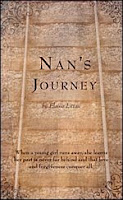
The Blog Tour for "Nan's Journey" Begins July 23
It is time to play a Wild Card! Every now and then, a book that I have chosen to read is going to pop up as a FIRST Wild Card Tour. Get dealt into the game! (Just click the button!) Wild Card Tours feature an author and his/her book's FIRST chapter!
You never know when I might play a wild card on you!
Today's Wild Card author is:
and his/her book:
Tate Publishing & Enterprises (January 2, 2008)
ABOUT THE AUTHOR:
Littau is a life-long resident of Perryton, TX. She met husband, Terry at the Apostolic Faith Bible College in Baxter Springs, Kansas in 1974. They married March 1, 1975 and reside on a small acreage near Perryton where they enjoy spending time with their family and friends. They raised three sons and now have three daughters-in-law and four grandchildren added to their family. They also enjoy visiting with their extended family located in Perryton, Clear Lake, Laverne, and Amarillo.
Author Elaine Littau is a busy woman who by profession is the church secretary for Harvest Time First Assembly of God Church in Perryton. Among other things she has led women’s groups and taught preschool, and was a mentor for the M.O.P.S. (Mothers of Preschoolers) group in her community. She has been active in Toastmasters and enjoys painting, crafts, and playing piano and organ. She was recently appointed to the Campus Education Improvement Committee for Wright Elementary in Perryton. She belongs to Christian Storytellers and Faith Writers writing groups.
“Nan’s Journey” was written over the course of several years. “A salvation message is at the core of the book.” Littau says. “If it weren’t for the Lord, I wouldn’t have been able to do this. I truly enjoy meeting new people.”
Littau is currently working on two other books that are continuations of “Nan’s Journey.” Book signings and speaking engagements are currently set up for venues in Texas, Oklahoma, Kansas, Colorado, and Oregon.
Visit the author's website.
Product Details:
List Price: $12.99
Paperback: 188 pages
Publisher: Tate Publishing & Enterprises (January 2, 2008)
Language: English
ISBN-10: 1602478325
ISBN-13: 978-1602478329
AND NOW...THE FIRST CHAPTER:
It was late. The moon had risen and the night symphony was in full force. Crickets chirped at their rivals, the frogs, and dominated the night chorus. Only one sound in the forest was foreign—a whimper from under the ferns. At the base of the largest pine in the woods was a small form crying, moaning, and whimpering. Black hair, matted and dirty, hung in long ropes down the front of the tiny girl. She had been in this spot for hours. At least that is what it felt like to her. Stretching, she cried out in pain. The blood-covered welts burst open to bleed again. Her back was wet with blood, and her dress was torn and useless.
Why had she dared to speak to the woman that she was obliged to call mother in that way? She knew that talking was not allowed from children before chores were finished. The accusations being made by “Ma” were totally false and she could not let Elmer take the blame for something she herself had forgotten to do. She shut her eyes tight against the memory, but it intruded anyway.
She had just gotten up to take the water off the stove to make up dishwater for the supper dishes. Ma had stepped outside the room to turn down her bed and prepare for sleep. When she reappeared in the kitchen, she realized that the wood supply next to the stove was low. Elmer was standing next to the table gathering the plates for washing. “Elmer, where is the wood you were supposed to bring up to the house?” Before he could answer, a hand had slapped him across his face. Getting back onto his feet and standing as tall as a five year old can stand, he looked her in the eye and said, “Ma, I was sick today, ‘member?”
“So, Elmer, you’re going to play up that headache trick again. Nan, didn’t your good for nothing Mama teach you people how to work, or are you just lazy?”
“Our Mama was good! Don’t you say mean things about her!” Nan yelled as her heart raced at the assault against her real Mama’s character.
“What about it, Elmer, are you like your weakling Mama or what?” Elmer’s eyes became very large and filled with tears. He could barely remember his real Mama, but when he did, he remembered soft kisses and sweet singing and a beautiful face. “I’m sorry; I’ll get the wood now.”
“No, Elmer, don’t. I promised you I’d do it today when your head was hurting, but I forgot. I’ll get it after I do these dishes.”
“Listen here, Nan, I’m the boss around here and Elmer will do what I say, when I say, and you will respect me.”
Nan’s eyes widened.
“Don’t look at me like that, little girl.”
Nan held her breath.
“Well, I guess you will be making a trip to the wood shed…with me!” Ma had grabbed her by the arm and jerked her along behind the shed. The strap was hanging there, waiting. Whippings were becoming more and more frequent. After Ma’s husband left, they had taken on a more cruel form. The last whipping was more like a beating. It took days for the marks to scab over and heal. Little Elmer had come in that night and brought some horse medicine from the barn and applied it to the oozing marks.
The next afternoon when the schoolteacher came over, Ma had already formulated a story. “Mrs. Dewey, we missed Nan and Elmer today at school. Are they sick?” Ma lied the first time in her life and said, “Well Miss Sergeant, since Mr. Dewey is going to be gone for another four weeks, I need more help around here to get things done. I’m holding the kids out until he gets back.” Week after week went by, and Mr. Dewey still hadn’t come home. Everyday Ma grew more and more angry. It became more and more impossible to please her. When she began hitting Elmer, it was too much. Nan had to do something— right or wrong; things couldn’t stay the way they were.
The coolness of the earth had settled into Nan’s bones. She stood silently for a minute and carefully crept up to the farmhouse. As she opened the door, she saw that Elmer was in the pallet at the foot of the stove next to her bedroll. Ma was asleep in her room. The door held open with a rock. Slowly she began peeling off the dress and the dried blood stuck to it. She reached for the old shirt she normally wore over her wounds and under her dress. She had washed it today. It had bloodstains on it, but it would keep her from ruining another dress. She retrieved the old work dress that she wore when chores were messier than usual; it was the only one left. She put it on swiftly and shook Elmer awake with her hand over his mouth. “Baby, we must leave. Do you understand? Stay quiet and I will get some stuff to take with us.”
She found large old handkerchief and began looking for food supplies. There was one sourdough biscuit and about a cup of cold brown beans. She located her tin cup and another rag. She would probably need that. Three matches were in the cup on the stove. She would just take two. Suddenly she heard a sound from Ma’s room. A scampering sound… just a rat. Ma turned over. Her breathing became deep and regular. For once Nan wished that Ma snored. She tied the handkerchief in a knot over the meager food supplies, grabbed their bedrolls, and slowly opened the door.
“Come on, Elmer. Can you carry this food? I’ll get your bedding. That’s a good boy. We must hurry!”
The cold air bit at their faces, but they walked bravely on.
“Elmer, we must go tonight so we can get as far away as we can before Ma wakes up and sees that we are gone.”
For the next half hour the pair walked in silence through the familiar woods past the graves on the hill. In one, a mother dearly loved, in another, an infant who had died the same day as his mother, and the third, a father that only Nan had memory of. Elmer was only two years old when Pa died in the logging accident. Nan snapped out of her reverie and urged Elmer on. Molasses, Pa’s good old workhorse, stood in the pasture. He skidded the logs Pa cut with his axe. His legs hadn’t healed quite right, but Mama hadn’t let Mr. Dewey kill him because he was all she had left of the husband of her youth. Molasses was a faithful friend to Nan and Elmer. He stood there and waited for them to mount him.
“Molasses, take us to…” Nan realized then that they had nowhere to go. Mrs. Dewey had said that they were ungrateful little imps who didn’t realize she and Mr. Dewey were taking care of them out of kindness, and they could easily be put into an orphanage. Nan didn’t know anything about orphanages except what Mrs. Dewey…uh, Ma had told her. “Molasses, just take us out of here.”
Why had she dared to speak to the woman that she was obliged to call mother in that way? She knew that talking was not allowed from children before chores were finished. The accusations being made by “Ma” were totally false and she could not let Elmer take the blame for something she herself had forgotten to do. She shut her eyes tight against the memory, but it intruded anyway.
She had just gotten up to take the water off the stove to make up dishwater for the supper dishes. Ma had stepped outside the room to turn down her bed and prepare for sleep. When she reappeared in the kitchen, she realized that the wood supply next to the stove was low. Elmer was standing next to the table gathering the plates for washing. “Elmer, where is the wood you were supposed to bring up to the house?” Before he could answer, a hand had slapped him across his face. Getting back onto his feet and standing as tall as a five year old can stand, he looked her in the eye and said, “Ma, I was sick today, ‘member?”
“So, Elmer, you’re going to play up that headache trick again. Nan, didn’t your good for nothing Mama teach you people how to work, or are you just lazy?”
“Our Mama was good! Don’t you say mean things about her!” Nan yelled as her heart raced at the assault against her real Mama’s character.
“What about it, Elmer, are you like your weakling Mama or what?” Elmer’s eyes became very large and filled with tears. He could barely remember his real Mama, but when he did, he remembered soft kisses and sweet singing and a beautiful face. “I’m sorry; I’ll get the wood now.”
“No, Elmer, don’t. I promised you I’d do it today when your head was hurting, but I forgot. I’ll get it after I do these dishes.”
“Listen here, Nan, I’m the boss around here and Elmer will do what I say, when I say, and you will respect me.”
Nan’s eyes widened.
“Don’t look at me like that, little girl.”
Nan held her breath.
“Well, I guess you will be making a trip to the wood shed…with me!” Ma had grabbed her by the arm and jerked her along behind the shed. The strap was hanging there, waiting. Whippings were becoming more and more frequent. After Ma’s husband left, they had taken on a more cruel form. The last whipping was more like a beating. It took days for the marks to scab over and heal. Little Elmer had come in that night and brought some horse medicine from the barn and applied it to the oozing marks.
The next afternoon when the schoolteacher came over, Ma had already formulated a story. “Mrs. Dewey, we missed Nan and Elmer today at school. Are they sick?” Ma lied the first time in her life and said, “Well Miss Sergeant, since Mr. Dewey is going to be gone for another four weeks, I need more help around here to get things done. I’m holding the kids out until he gets back.” Week after week went by, and Mr. Dewey still hadn’t come home. Everyday Ma grew more and more angry. It became more and more impossible to please her. When she began hitting Elmer, it was too much. Nan had to do something— right or wrong; things couldn’t stay the way they were.
The coolness of the earth had settled into Nan’s bones. She stood silently for a minute and carefully crept up to the farmhouse. As she opened the door, she saw that Elmer was in the pallet at the foot of the stove next to her bedroll. Ma was asleep in her room. The door held open with a rock. Slowly she began peeling off the dress and the dried blood stuck to it. She reached for the old shirt she normally wore over her wounds and under her dress. She had washed it today. It had bloodstains on it, but it would keep her from ruining another dress. She retrieved the old work dress that she wore when chores were messier than usual; it was the only one left. She put it on swiftly and shook Elmer awake with her hand over his mouth. “Baby, we must leave. Do you understand? Stay quiet and I will get some stuff to take with us.”
She found large old handkerchief and began looking for food supplies. There was one sourdough biscuit and about a cup of cold brown beans. She located her tin cup and another rag. She would probably need that. Three matches were in the cup on the stove. She would just take two. Suddenly she heard a sound from Ma’s room. A scampering sound… just a rat. Ma turned over. Her breathing became deep and regular. For once Nan wished that Ma snored. She tied the handkerchief in a knot over the meager food supplies, grabbed their bedrolls, and slowly opened the door.
“Come on, Elmer. Can you carry this food? I’ll get your bedding. That’s a good boy. We must hurry!”
The cold air bit at their faces, but they walked bravely on.
“Elmer, we must go tonight so we can get as far away as we can before Ma wakes up and sees that we are gone.”
For the next half hour the pair walked in silence through the familiar woods past the graves on the hill. In one, a mother dearly loved, in another, an infant who had died the same day as his mother, and the third, a father that only Nan had memory of. Elmer was only two years old when Pa died in the logging accident. Nan snapped out of her reverie and urged Elmer on. Molasses, Pa’s good old workhorse, stood in the pasture. He skidded the logs Pa cut with his axe. His legs hadn’t healed quite right, but Mama hadn’t let Mr. Dewey kill him because he was all she had left of the husband of her youth. Molasses was a faithful friend to Nan and Elmer. He stood there and waited for them to mount him.
“Molasses, take us to…” Nan realized then that they had nowhere to go. Mrs. Dewey had said that they were ungrateful little imps who didn’t realize she and Mr. Dewey were taking care of them out of kindness, and they could easily be put into an orphanage. Nan didn’t know anything about orphanages except what Mrs. Dewey…uh, Ma had told her. “Molasses, just take us out of here.”